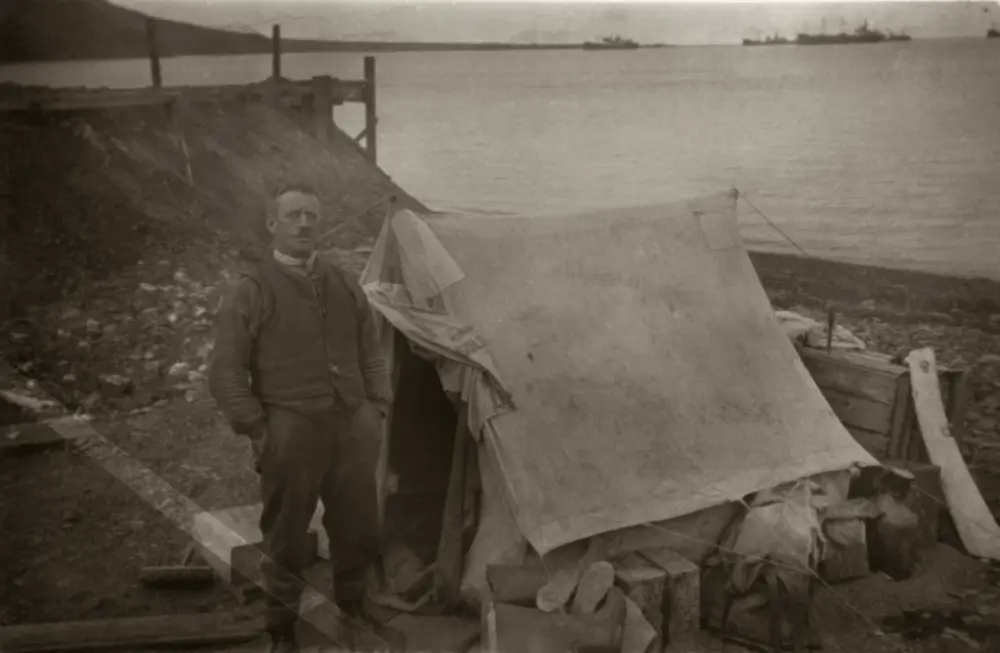
But most of the time his only companion was his dog Siff. He was devastated when Siff disappeared, but even more joyful when the dog returned unharmed. Arthur built many of the trapper’s cabins that are now protected as cultural heritage in Svalbard, including the cabin shown at this museum. During World War II Anna and Arthur were evacuated to Scotland, but they returned for one last season in 1946. The following year they moved to the mainland, and Arthur opened a hot dog stand in Tromsø.
“With her feminine sense of the importance of details, she made this house a real home, where everyone could feel comfortable.”
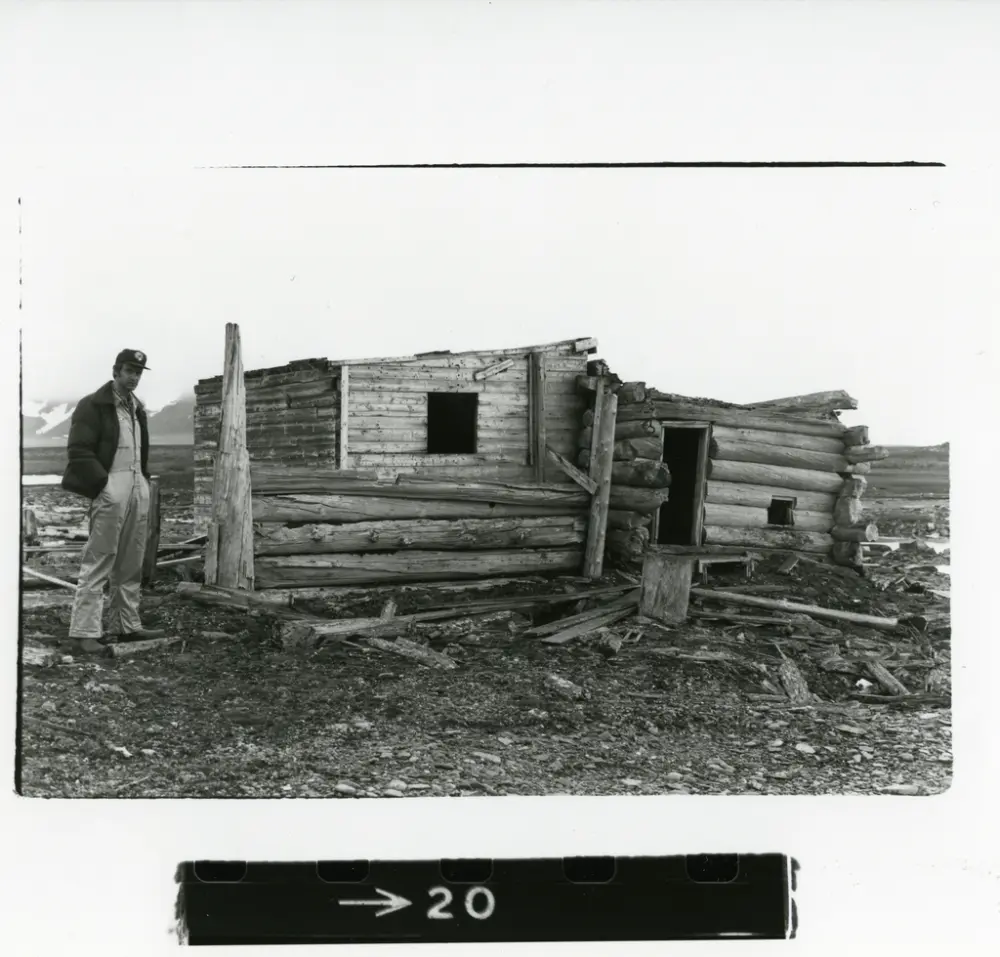
This cabin, which originally stood in northernmost Spitsbergen, is probably one of the oldest buildings in Svalbard. The oldest parts were built by Russian trappers – Pomors – in the 18th century. The cabin consisted of a common room, storeroom, sauna and vestibule. It was heated by a chimneyless fireplace. When the Pomors stopped coming to Svalbard, the cabin was abandoned.
In 1921, the Norwegian trappers Arthur Oxaas and Georg Bjørnes constructed a new cabin on the ruins of the old one. It was used as a trapping station until the 1950s, and later, sporadically, by researchers and others. In 2021, due to coastal erosion, the cabin was in danger of being washed to sea. The Directorate of Cultural Heritage allowed the building to be moved and the site to be excavated by archaeologists.