- 1/1
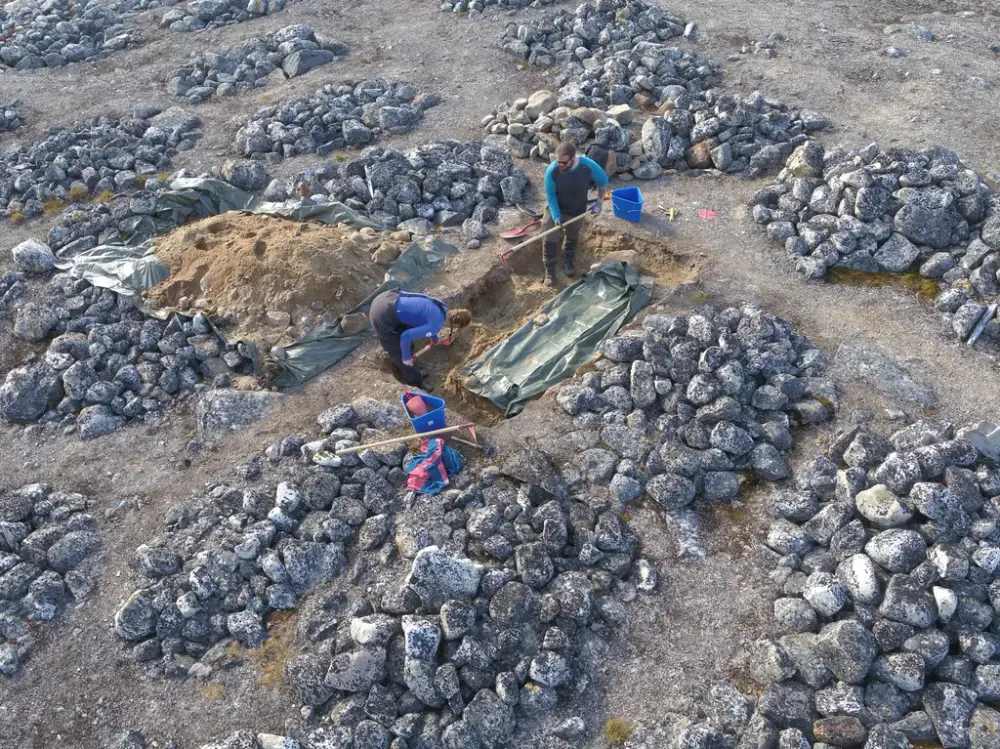
Excavation at Likneset, 2019. Photo: Lise Loktu and Espen Olsen, Governor of Svalbard.
Research on Old Burial Grounds
During the first half of the 17th century, large-scale bowhead whaling took place in the fjords of Svalbard. Many of those involved in the whaling industry died during the hunting season, leading to the establishment of several large burial grounds across the archipelago. Even after the whales disappeared from the fjords and whaling operations moved into the Greenland Sea, deceased whalers continued to be buried on land. The largest burial grounds are located in Smeerenburgfjorden in northwestern Spitsbergen, where approximately 700 graves have been preserved.
Material from these graves formed the basis of the research project Skeletons in the Closet: Studies of Climate Change and the Degradation of Archaeological Heritage Environments in Svalbard, led by archaeologist Lise Loktu (NIKU). Material from various excavations has been re-examined to investigate how climate change affects the preservation of archaeological remains. The research has also documented pathological traces on the skeletons, providing new knowledge about the health and working conditions of the whalers. In addition, the textiles found in the graves have been studied to assess the social status and roles of the individuals involved in the whaling industry.
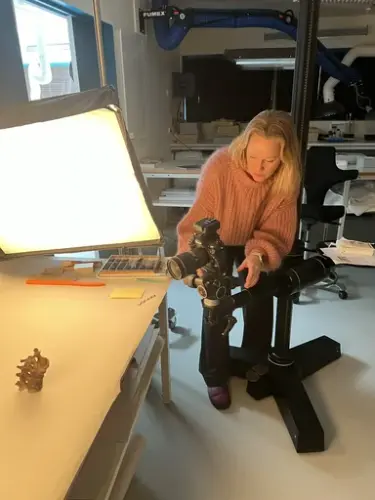
Project leader Lise Loktu. Elin Brødholt, NIKU
Comparing Burial Sites
Lise Loktu has carried out new investigations of whaler graves excavated in Smeerenburgfjorden, within Northwest Spitsbergen National Park, between 1985 and 1990. Most of the archaeological material from these large-scale excavations was previously housed by the institutions responsible for the fieldwork. During the 2000s, the material was returned to Svalbard and is now curated by Svalbard Museum.
The analyses include preserved skeletons and textiles from the major burial grounds at Likneset, Jensenvatnet, Smeerenburg, and Ytre Norskøya. Due to the permafrost and cold climate of Svalbard, these graves remained exceptionally well preserved until recently. By comparing the condition of graves excavated in the 1980s with those excavated from the same area in 2016 and 2019, researchers have identified clear changes in preservation quality.
Climate Change as a Threat
The new analyses show that climate change in Svalbard over the past 30 to 40 years has had serious consequences for cultural heritage sites. A warmer climate, combined with more extreme weather, increased precipitation, and thawing permafrost, is causing graves to deteriorate and collapse at an accelerating rate. Reduced sea ice is also contributing to stronger coastal erosion.
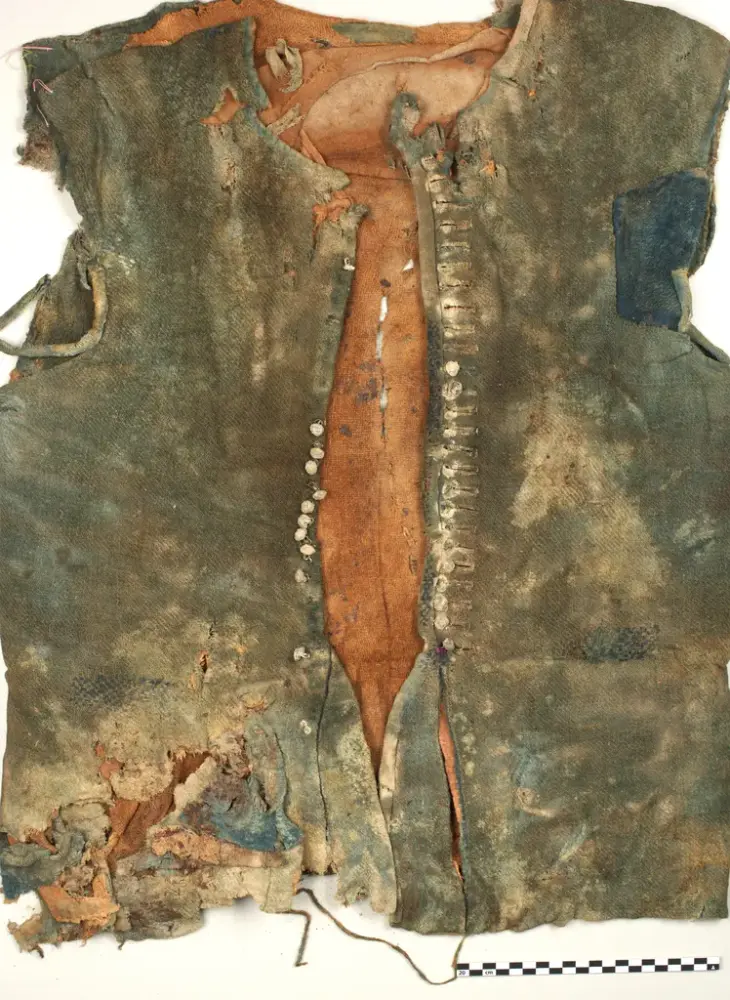
At Likneset, researchers have documented graves collapsing due to ground subsidence, erosion, and soil cracking. As coffins decay, skeletal and textile materials become exposed to air and moisture, accelerating decomposition. Comparisons between older and more recent excavations indicate not only that degradation is progressing more rapidly now than in the 1980s, but also that textiles seem to be especially susceptible to deterioration.
- 1/1
Well-preserved textiles from excavations at Likneset in the 1980s. Photo: Lise Loktu, NIKU.
Health and Living Conditions
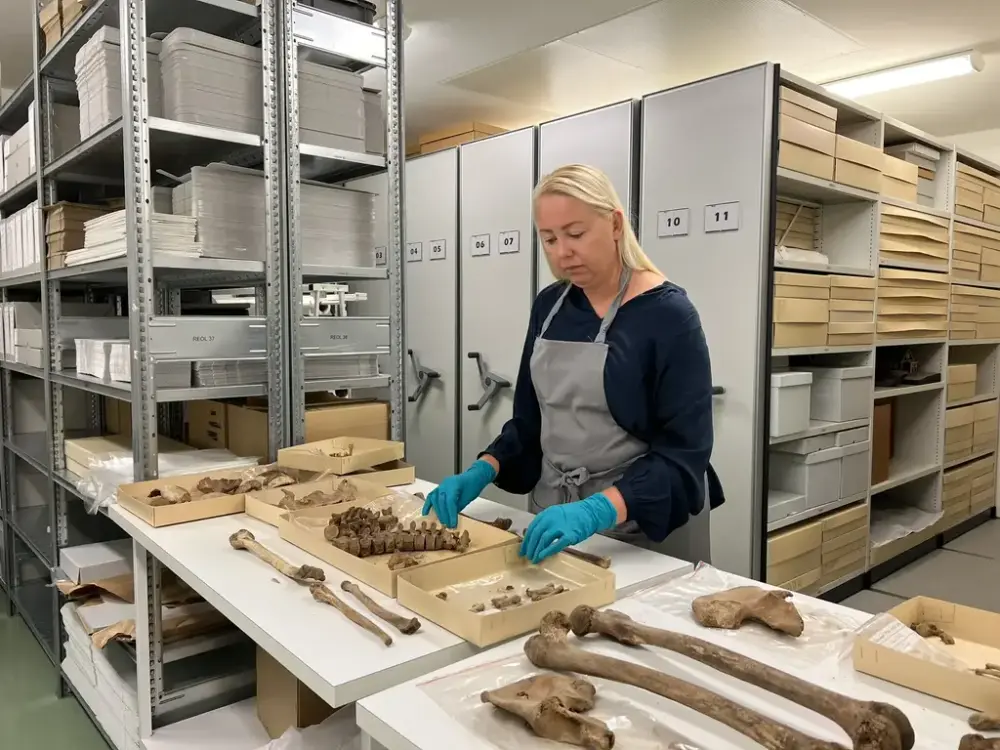
The skeletal analyses conducted so far at Likneset and Jensenvatnet reveal much about the lives and health of the people involved in whaling. Most of those buried were young men in their twenties. Approximately two-thirds show dental markers indicating disease or malnutrition during childhood. Nearly all displayed clear signs of scurvy, a disease caused by vitamin C deficiency.
Many also had wear and stress markers on their bones, indicating prolonged periods of hard physical labour, particularly involving the upper body. These traces may reflect specific occupational tasks within the whaling industry that left distinctive signatures on the skeleton.
Osteologist Elin Brødholt conducted the skeletal analyses. Photo: Lise Loktu, NIKU.
Social Differences
The findings suggest that the lives of the whalers buried at Likneset and Jensenvatnet were marked by poverty, periods of malnutrition, and hard physical labour. However, there are also indications of social differences among the whalers buried in Svalbard.
For example, average stature is significantly greater at Likneset than at other burial grounds in the area. This may indicate better social and economic conditions during childhood, or it could reflect selective recruitment practices. Economic status may also be reflected in the quantity and types of clothing buried with the deceased.
It is known that the clothes of deceased sailors could be auctioned off to provide financial support for relatives back home and to settle outstanding debts. Nevertheless, the textiles display a high degree of similarity, suggesting that clothing formed part of a broader maritime provisioning system through which sailors could obtain necessary equipment and supplies, known as slope.
A Shared European Cultural Heritage
Preliminary analyses of the graves reveal variations in skeletal and textile materials that may indicate that different groups used the burial grounds in Smeerenburgfjorden. This will be investigated further in future studies.
The variations may result from differences in time period, social status, profession, role aboard ship, or the nationality of the employer, in other words, the country from which the vessel originated. DNA and isotope analyses of selected skeletons from Smeerenburgfjorden suggest that the whalers represented a variety of nationalities.
For this reason, it may be misleading to interpret the burial grounds solely according to national affiliation, even though the employers represented different countries. Lise Loktu instead proposes describing the material as a shared European cultural heritage that transcends national boundaries.
The Skeletons in the Closet project constitutes the first phase of a long-term research programme entitled CLIMARCH: Studies on Climate Change and the Degradation of Archaeological Environments in Svalbard. The project is led by Lise Loktu of NIKU (Norwegian Institute for Cultural Heritage Research), with osteologist Elin T. Brødholt contributing the skeletal analyses.
Further Reading: